This collection documents the development of our custom VR 180° camera rig, created specifically for 1666: The Burning City. Beginning with precise 3D modeling in Rhino, the rig underwent several design iterations and 3D printing tests at the LCC print lab. The initial prototype proved too large and fragile, prompting a redesigned version with a more compact and durable frame.
The rig houses two 360° cameras positioned side-by-side to record stereoscopic 180° video—crucial for delivering an immersive VR experience. To enhance the realism, we also captured spatial ambient audio using an ambisonic recorder.
We used Google Cardboard VR headsets to test and preview the footage, simulating the end-user experience. This iterative process of design, testing, and refinement reflects our technical commitment to authentically capturing immersive perspectives of both historic and contemporary London.
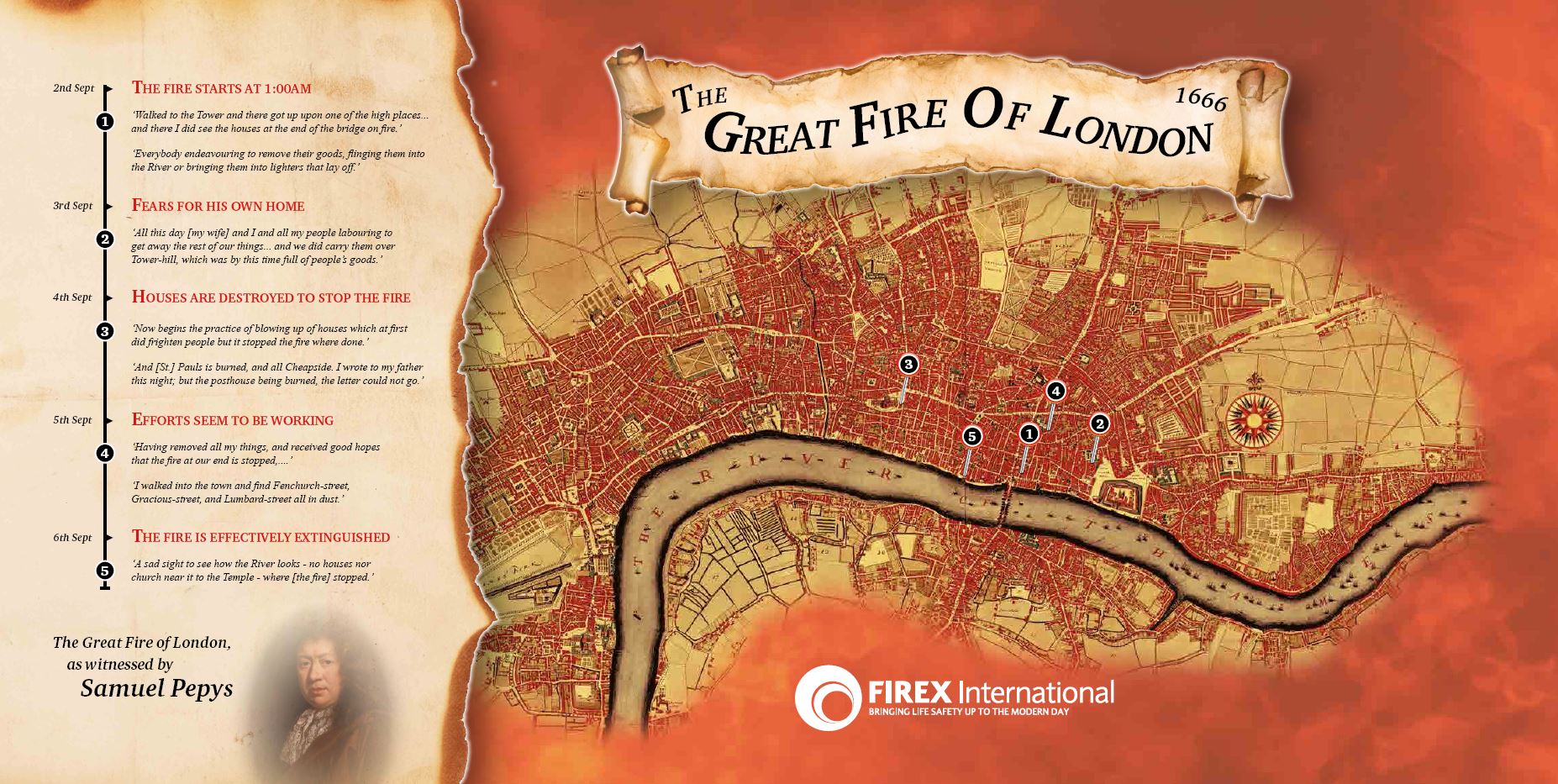
The fire began in the early hours of September 2 and burned uncontrollably for four days, finally being contained on September 6.
Location:
Pudding Lane, City of London
The fire started in a bakery owned by Thomas Farriner and quickly spread across the densely populated area of central London, devastating homes, businesses, and landmarks.
Historical Significance:
The Great Fire of London was a transformative event in the city’s history. It destroyed over 13,000 homes, 87 parish churches, and iconic structures like St. Paul’s Cathedral. It marked the end of medieval London and paved the way for modern urban planning and fire safety measures, including the widespread use of brick and stone in rebuilding efforts. Sir Christopher Wren’s redesign of St. Paul’s Cathedral became a symbol of the city’s resilience and rebirth.
Visual Potential:
This event offers dramatic visual storytelling possibilities:
The spread of flames taking down timber-framed buildings.
Detailed recreations of 17th-century London’s architecture and street life before or after the fire.
etc.
Interactive Opportunities
Allow users to explore Pudding Lane as the fire begins and spreads.
Interact with historical figures like Samuel Pepys or King Charles II, learning about their roles during the disaster.
Discover how firebreaks were created and experience the challenges of containing the fire.
Offer a chance to rebuild parts of the city, pass a brick to the worker, etc.
Challenges or Constraints:
Creating realistic and immersive fire animations that can run smoothly in VR.
Accurately convey this historical events with engaging storytelling.
Representing the scale and intensity of the events within the given timeframe.
Event Summary (What Happened)
The Great Fire of London was a catastrophic event that began in a bakery on Pudding Lane. It spread rapidly across the city, fueled by strong winds and the densely packed timber-framed buildings. Over the course of four days, the fire destroyed thousands of homes, businesses, and iconic landmarks, including the original St. Paul’s Cathedral. The disaster reshaped the city, leading to significant changes in urban planning and fire safety regulations, as well as the construction of new buildings in stone and brick.
This event offers immense visual potential for an immersive experience, featuring dramatic flames, smoke-filled skies, and the chaotic evacuation of residents. Users could interact with historical figures like Samuel Pepys, explore the unfolding disaster in real-time, and learn about the containment efforts. However, the project would need to address challenges such as creating realistic fire animations, maintaining historical accuracy, and handling the sensitive aspects of the destruction. Primary sources like Samuel Pepys’ diaries, historical maps, and Museum of London archives provide invaluable resources for accurate storytelling.