
Critical Practice and Exploration
1666 The Great Fire of London
The replies to questionnaires
We searched the old map of London in 1666 to compare it with modern London.
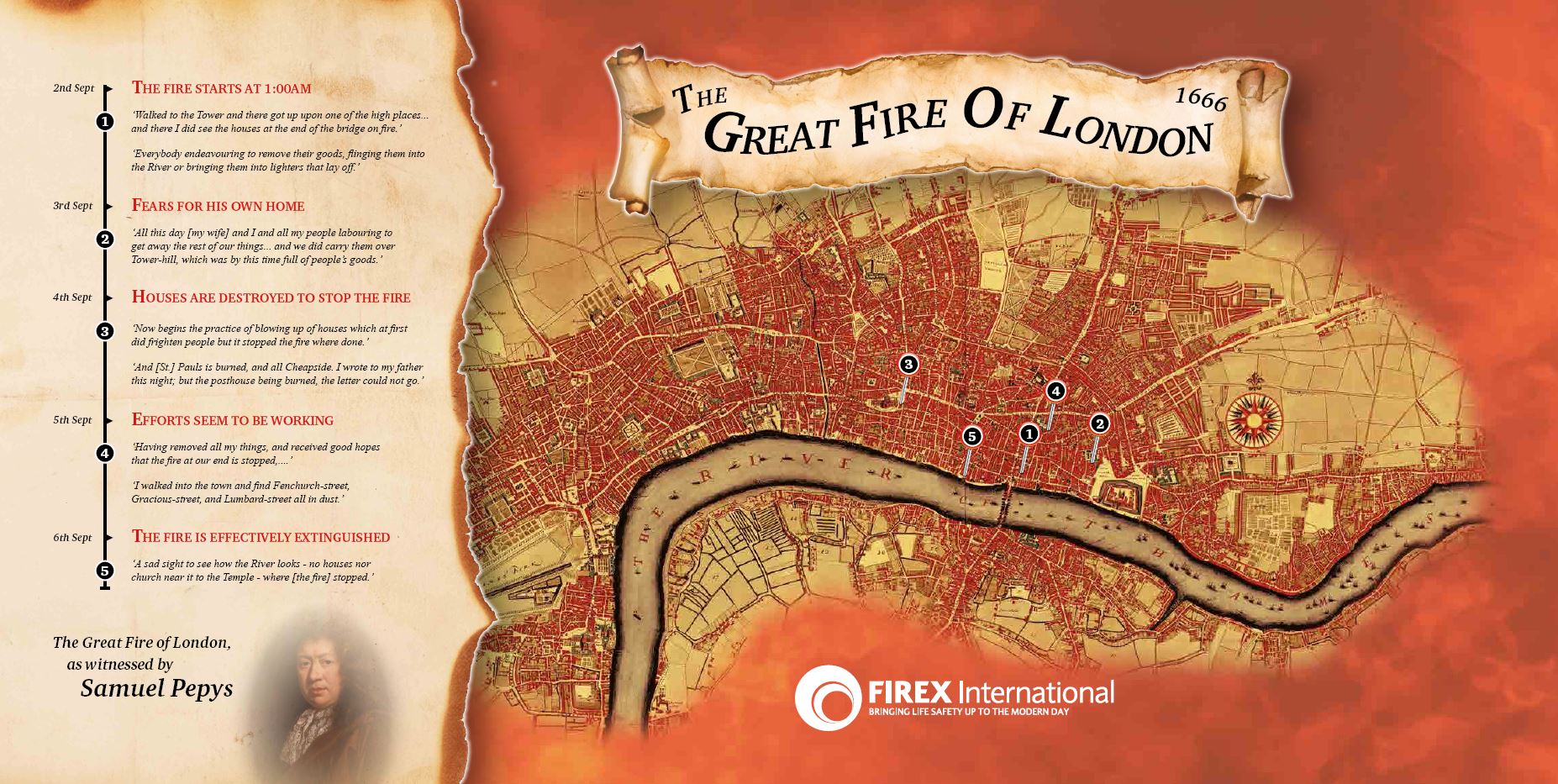
After watching the relevant videos, we’ve compiled a detailed timeline that outlines the key events of the storyline.
Time Period: 1666
The fire began in the early hours of September 2 and burned uncontrollably for four days, finally being contained on September 6.
Location:
Pudding Lane, City of London
The fire started in a bakery owned by Thomas Farriner and quickly spread across the densely populated area of central London, devastating homes, businesses, and landmarks.
Historical Significance:
The Great Fire of London was a transformative event in the city’s history. It destroyed over 13,000 homes, 87 parish churches, and iconic structures like St. Paul’s Cathedral. It marked the end of medieval London and paved the way for modern urban planning and fire safety measures, including the widespread use of brick and stone in rebuilding efforts. Sir Christopher Wren’s redesign of St. Paul’s Cathedral became a symbol of the city’s resilience and rebirth.
Visual Potential:
This event offers dramatic visual storytelling possibilities:
Interactive Opportunities
Challenges or Constraints:
| 360º | 180º | |
| Pros | Is easier to shoot and less distortion in the view perspective.High degree of freedom, which is suitable for strong interactive and exploratory types of games.No boundary, Greater sense of Presence. | no need to remove the photographer by roto in post production.Good to experiment with better visual quality.The focus of the audience’s attention is clearer. May be more narrative friendly to catch audience’s attention. |
| Cons | The photographer must be present in the video, and more time is needed to remove them from the shot.Too much information may affects the audience’s focus and can be confusing.The visual quality is relatively poor.Diziness, More likely to cause motion sickness. | Lens distortion appears more pronounced when it’s near the edges of the video boarder.The edge may affect the immersive experience and Presence. |
What did the Great Fire destroy?
The flames ran riot through the city, going east to the Tower of London and west as far as the Temple. The scale of destruction was greater than the Blitz in the 1940s.
The fire claimed 13,200 houses and 87 churches. It tore through Cheapside, London’s main street. It destroyed the Guildhall – the home of London’s government. And it wrecked the old St Paul’s Cathedral.
In this plan of the city from our collection, the area destroyed by fire is shown in white. When archaeologists dig in London, they often find a layer of scorched debris from the fire – a lot of it has ended up in our collection.
After reviewing the all concept, most of us voted for The Great Fire of London